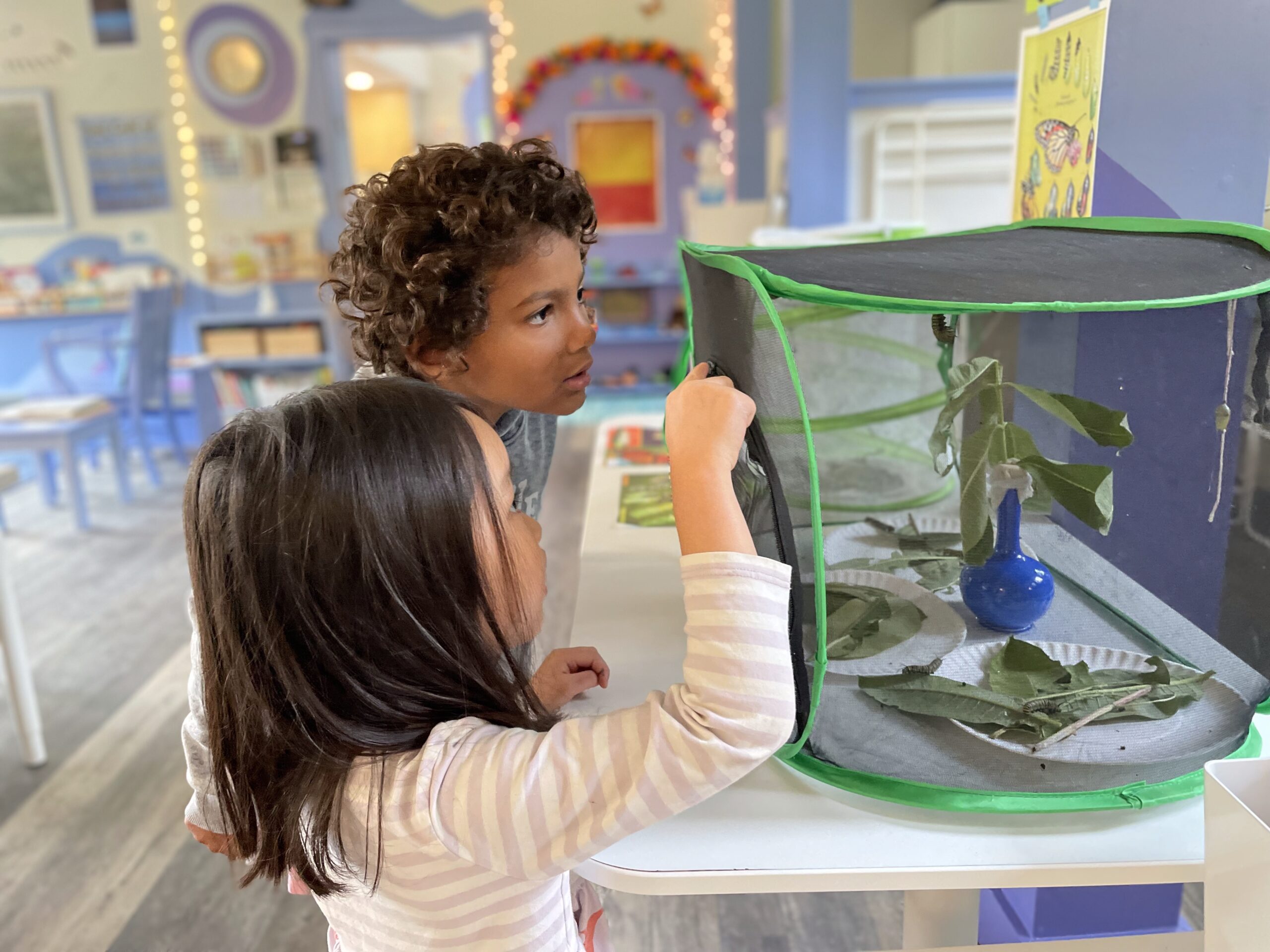
Why Progressive Education Is the Best Preparation for Your Child’s Future

What will the world look like in twenty years when your child is a young adult? We don’t know, but we are certain that it will not look like today.
Let’s use the last twenty years as a case study. In 2005, two percent of Americans owned a smartphone. Facebook was a new website that was not yet open to the public. The AI that now exists was merely a plot line in science fiction films. Climate change was only beginning to enter mainstream conversation, and the idea of remote or hybrid work was almost unheard of.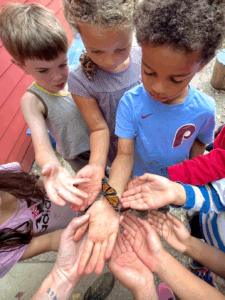
With such rapid change, one cannot anticipate what the world will look like when their child one day enters the workforce. We do know that an education that trains for certain jobs is not as valuable in this world.
What becomes more important is an education that prepares children to encounter novel situations–ones that do not even exist yet–with the curiosity, confidence, and critical thinking skills to navigate them either independently or in collaboration with diverse groups of people.
We believe Progressive education prepares children for this future.
What is Progressive education, and how does it prepare children for the future?
It might be best to start talking about what Progressive education is by thinking of a more conventional classroom space. The classroom that, maybe, you sat in as a child. This room had a daily set of objectives and national standards written on the board. These classes had textbooks, workbooks, and a teacher standing in the front of the room. There was the omnipresent, ticking analog clock that you likely spent a good amount of time staring at above the door.
A Progressive classroom has all of these elements too. They just look a little different and the pieces serve different purposes.
Let’s start with the objectives and standards written on the board. Progressive schools follow a scope and sequence with national standards and have highly developed unit plans with daily objectives. Teachers know where they are going to start the year and where they want to end up.
However, a Progressive teacher centers the child and never loses sight of the child in the learning journey. They constantly ask, How do I bring the child into the learning? Am I considering their unique learning profile? Is my teaching developmentally appropriate? Through this process, the learning is made accessible to all of the learners in the room.
When all children can access the material and their natural curiosity has been tapped into, they dive in. They ask many, many questions. They experiment. They follow the path of their discoveries – sometimes in ways the teacher did not expect. That’s okay in a Progressive space because Progressive teachers are nimble and can guide kids down their own path for a bit before guiding them back to the learning plan.
Eventually, after much time spent in experimentation, the children find solutions. Through this process, they learn how to think; they learn how to try again; they gain confidence in their ability to problem solve. By design, the Progressive classroom will focus on fewer topics than classrooms in other settings, so children are able to move at a slower pace. This encourages the deep diving into content described above.
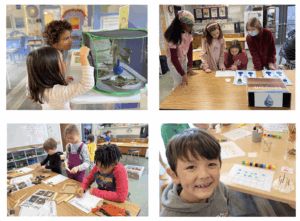
There are still textbooks and workbooks in the Progressive classroom, but the textbooks become a reference point. They are not the primary teachers. Workbooks are just one way to practice and show our knowledge. Hands on, long-term projects are really the bulk of the work.
Teachers stand in front of the room sometimes, but days are mostly filled with teachers working alongside children in small groups or in one-on-one conferences. Desks are present, but not in neat rows. They’re arranged to foster collaboration. The analog clocks? Oh, we have them and still teach children to read them. The difference is that children are not staring at them all day long and counting down the minutes to leave the room.
At Miquon, a Progressive school in the Philadelphia area, we feel secure in the fact that children leave our program with the ability to confidently encounter novel situations and problem solve with resilience and creativity. While we do not know what the future will look like, we know that Miquon kids will be ready for it.
Read more about our Progressive approach at miquon.org/progressive-education.
